At Morrison & Hughes, we fight every day for people who’ve been hurt in car wrecks, on dangerous property, or by someone else’s negligence. So, when we see major changes in the law, especially those that limit your ability to recover fair compensation, we pay close attention.
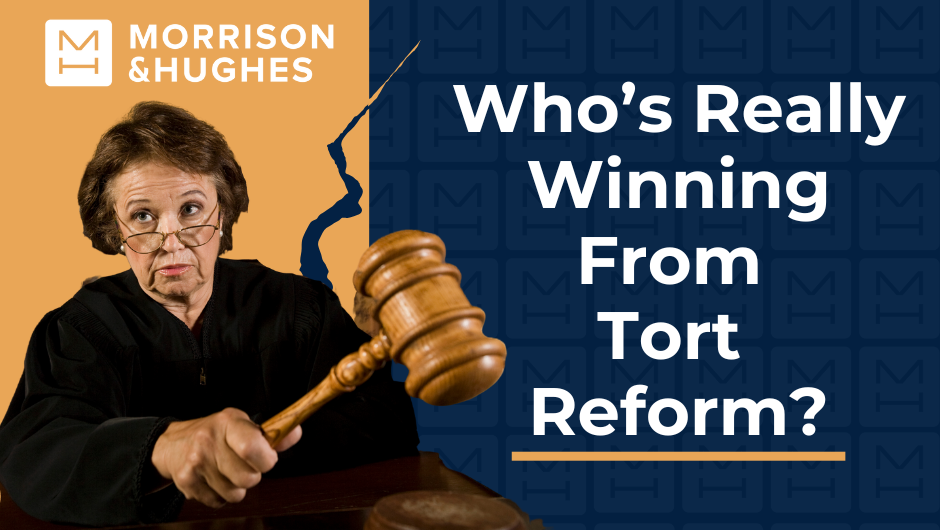
One of the biggest stories in recent years is tort reform. It’s been sold to the public as a way to reduce frivolous lawsuits and bring down insurance rates. But if you take a closer look at what’s happening behind the scenes, you’ll see who’s really benefitting.
Allstate’s Profits Soar — While Premiums Go Up
According to a July 2025 report from Insurance Journal, Allstate just posted $2.1 billion in profit for the second quarter of this year. That’s seven times more than they made in the same quarter last year. What changed?
- Their auto insurance division made $1.3 billion in profit—a dramatic increase from the $370 million in Q2 2024.
- Their combined ratio (which shows how much they’re paying out in claims vs. what they’re collecting in premiums) dropped to 86—a number that signals big profits.
- They saw a “favorable reserve development” of $415 million, meaning they expected to pay more in claims than they actually had to.
And yet… they still raised premiums.
- Homeowners’ premiums jumped 14%.
- Auto premiums went up 5.4%.
So, they’re making record profits—but drivers and homeowners are still paying more.
What Does This Have to Do with Tort Reform?
Tort reform laws passed in Georgia and other states in the past year have made it harder for everyday people to hold large corporations and insurance companies accountable. These laws:
- Cap non-economic damages (like pain and suffering)
- Limit lawsuits against property owners and businesses
- Restrict third-party funding that helps injured people afford to fight back in court
What does that mean in real life? If you’re badly injured by someone else’s negligence, your case may now be worth less—even if your life has been turned upside down.
At the same time, insurance companies are saving money on legal costs and payouts—but they’re not passing those savings on to you.
Real Talk: Tort Reform Helps Big Insurance, Not Injured People
Allstate’s numbers tell a clear story: They’re paying out fewer claims, settling for less, and making more money. That’s not a coincidence—it’s the result of a legal system that’s being tilted in their favor.
Meanwhile, regular people who’ve been hurt through no fault of their own are finding it harder to:
- Get full and fair compensation
- Find a lawyer who can take their case under the new limits
- Afford the medical treatment and long-term care they need
What You Can Do
- Know your rights – Just because the law has changed doesn’t mean you’re powerless. There are still ways to hold negligent parties accountable, and we know how to navigate this new landscape.
- Talk to a real trial lawyer early – Don’t trust the insurance company to tell you what your case is worth. Their goal is to pay you as little as possible.
- Support policies that protect people, not profits – When the legal system works only for corporations, it stops working for the rest of us.
At Morrison & Hughes, we believe injured people deserve a voice—and we won’t stop fighting for fairness, no matter how the laws change. If you’ve been hurt, don’t wait. Contact us onlineor call 404-LAW-TEAMfor a free consultation. We’re here to help you get what’s rightfully yours.
Call us today at (404) LAW-TEAM or visitmorrisonhugheslaw.com to get started!