
Car insurance costs are rising across Georgia, and more drivers are responding by dropping coverage entirely or carrying only the bare minimum the law requires. On the surface, that decision saves money every month. In practice, it transfers the financial risk of a crash directly onto you — the driver who did pay for insurance.
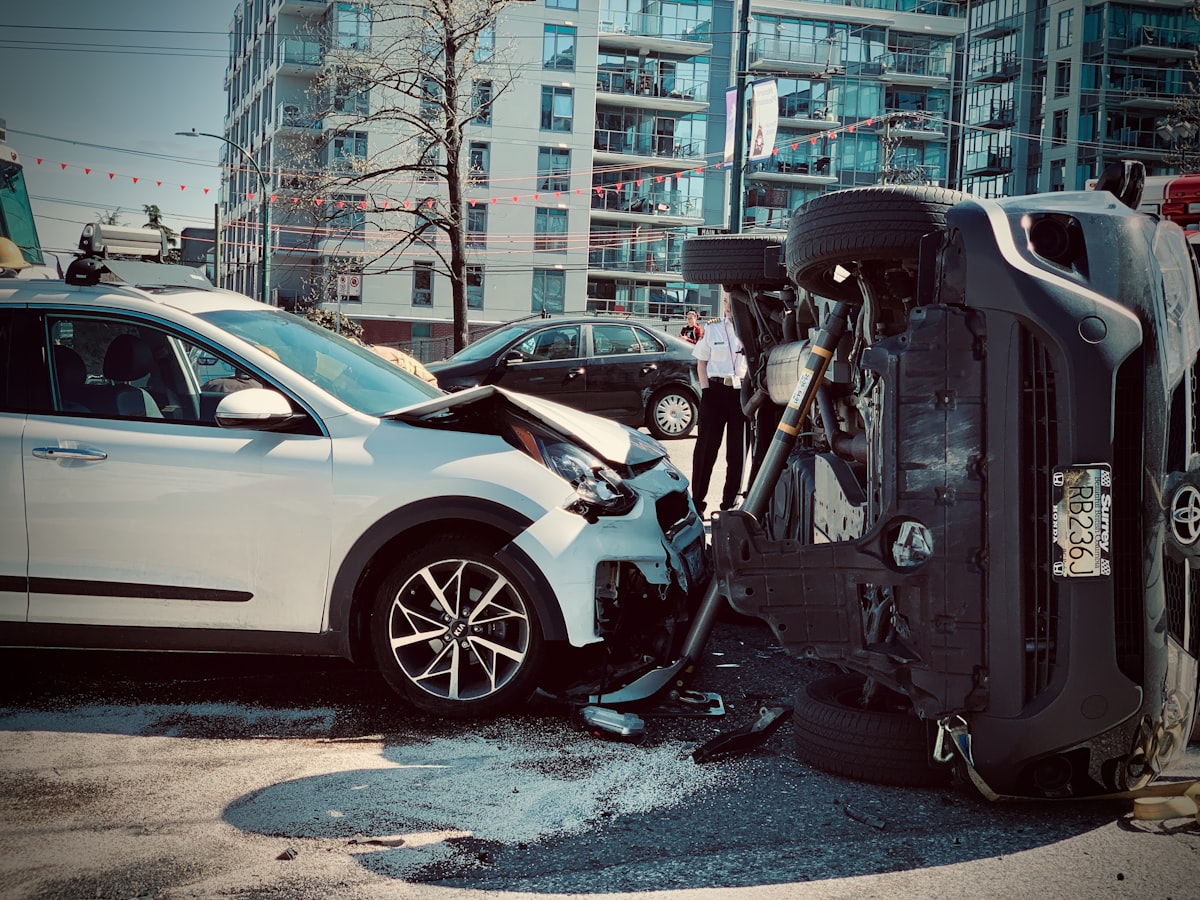
An accident with an uninsured driver can leave you holding the bills — unless your own policy is built to protect you.
The Scope of the Problem: Georgia’s Uninsured Driver Crisis
The odds that you will share a Georgia road with an uninsured driver are not small. According to data compiled by the Insurance Research Council and reported through 2025 and 2026:
- Approximately 12–19% of Georgia drivers are uninsured — roughly 1 in 6 to 1 in 8 vehicles on Georgia roads carries no liability insurance at all.
- Nationally, 15.4% of drivers were uninsured as of 2023, according to the Insurance Research Council — more than 1 in 7 drivers on American roads.
- Georgia consistently ranks among the states with higher-than-average uninsured motorist rates, with some estimates placing the state’s rate as high as 19–20%.
Beyond drivers with no insurance, there is a second group that creates just as much financial danger: drivers who carry only Georgia’s mandatory minimum coverage.
Georgia’s Minimum Coverage Limits Are Often Not Enough
Under O.C.G.A. § 40-6-10, every Georgia driver is required to carry liability insurance at the following minimum levels — commonly written as 25/50/25:
| Coverage Type | Georgia Minimum Required | What It Actually Pays |
|---|---|---|
| Bodily Injury — Per Person | $25,000 | Maximum $25,000 toward one person’s injuries |
| Bodily Injury — Per Accident | $50,000 | Maximum $50,000 total for all injured parties |
| Property Damage | $25,000 | Maximum $25,000 for vehicle and property damage |
A single emergency room visit, imaging, surgery, or hospitalization can easily exceed $25,000. A serious accident — a broken leg, a back injury, a head injury — can produce medical bills and lost wages well into the six figures. A driver carrying the state minimum has technically complied with the law, but their policy stops paying long before your bills stop arriving.
Millions of Georgia drivers carry only the 25/50/25 minimum. If one of them causes a serious crash, their insurance will pay out its limit quickly — and you will be left holding the rest of the bill unless you have adequate UM coverage on your own policy.
Georgia’s Uninsured Motorist Law: O.C.G.A. § 33-7-11
The statute governing UM coverage in Georgia is O.C.G.A. § 33-7-11. This law requires insurance companies offering automobile liability policies in Georgia to also offer Uninsured/Underinsured Motorist (UM/UIM) coverage. It governs how that coverage works, how disputes are handled, and — critically — what type of UM coverage your policy provides.
Key protections built into the statute include:
- Your insurer cannot raise your premiums solely because you made a valid UM claim. You cannot be penalized for using coverage you paid for.
- UM coverage applies not just when the at-fault driver has no insurance, but also when their coverage is insufficient to cover your actual losses.
- Since a 2009 amendment to O.C.G.A. § 33-7-11, the default form of UM coverage in Georgia is “add-on” (stacking) coverage. To choose the less protective “reduced-by” form, an insured must make that election in writing.
Reference: O.C.G.A. § 33-7-11 (Uninsured motorist coverage under motor vehicle liability policies); O.C.G.A. § 40-6-10 (Insurance requirements for operation of motor vehicles generally).

Reviewing the details of your UM coverage before a crash is the only time that knowledge is free.
The Critical Difference: “Add-On” vs. “Reduced-By” UM Coverage
This is one of the most misunderstood aspects of Georgia auto insurance — and one of the most consequential. The type of UM coverage on your policy determines how much money is actually available to you after a crash.
Add-On (Stacking) Coverage — The Default Under Georgia Law
With add-on UM coverage, your UM limits are stacked on top of whatever liability coverage the at-fault driver carries. The two amounts combine.
Your UM policy adds to the at-fault driver’s limits. You have access to the full $125,000.
Reduced-By (Difference-in-Limits) Coverage — The Less Protective Option
With reduced-by UM coverage, your UM limits are reduced dollar-for-dollar by whatever the at-fault driver’s liability policy pays. Instead of stacking, the amounts offset each other.
You paid for $100,000 in UM protection, but you only net $100,000 total — the same as your UM limit alone. The at-fault driver’s $25,000 does not add to your recovery; it simply counts against your UM limit.
| Add-On (Stacking) | Reduced-By | |
|---|---|---|
| Georgia Default? | Yes (since 2009) | No — must elect in writing |
| At-fault has $25k; you have $100k UM | $125,000 total available | $100,000 total available |
| Premium Cost | Slightly higher | Lower |
| Best protection? | ✓ Yes | ✗ No |
Many Georgia drivers unknowingly elected reduced-by coverage when they first bought their policy — often simply to lower their monthly premium. The difference in premium is usually modest. The difference in what you can recover after a serious accident can be tens of thousands of dollars.
Pull out your current policy declarations page and look for the UM section. It should specify whether your coverage is “add-on” or “reduced-by.” If you are not sure, call your agent and ask directly. This one conversation could be worth six figures.
The Real Risks of Inadequate UM Coverage
Insufficient UM coverage does not just mean a smaller settlement check. In a serious accident, it can mean the difference between financial stability and financial ruin.
Scenario 1: Hit by an Uninsured Driver
There is no liability policy to collect against at all. Without UM coverage, you are left pursuing the at-fault driver directly — and most uninsured drivers have no meaningful assets to collect. Medical bills, lost wages, and pain and suffering become your problem entirely.
Scenario 2: Hit by a Minimum-Coverage Driver
The at-fault driver has $25,000 in liability coverage. Your injuries — a hospital stay, surgery, physical therapy — total $120,000. Without UM coverage, you receive $25,000 and absorb the remaining $95,000. With $100,000 in add-on UM coverage, you can access up to $125,000 — far closer to making you whole.
Scenario 3: Multiple Vehicles Involved
The at-fault driver’s $50,000 per-accident limit gets split among multiple injured parties. Your share may be far less than your individual damages. UM coverage steps in to bridge that gap for each affected victim.
What You Stand to Lose Without Adequate UM Coverage
- Emergency room and hospital bills that can reach six figures in a serious crash
- Ongoing medical treatment, surgery, rehabilitation, and specialist care
- Lost income during recovery — including weeks or months out of work
- Long-term disability or reduced earning capacity
- Pain, suffering, and quality of life damages
- Out-of-pocket costs your health insurance will not cover
The uncomfortable truth: Georgia law requires the other driver to carry insurance — but it cannot force them to actually do it. With an estimated 1 in 6 to 1 in 8 Georgia drivers uninsured, and millions more carrying only the $25,000 minimum, the only reliable protection you have after a serious crash is the coverage on your own policy.

Emergency care costs can exhaust Georgia’s minimum liability limits in a single visit. UM coverage is what stands between you and the remaining bills.
How Much UM Coverage Do You Actually Need?
At a minimum, your UM coverage should match your bodily injury liability limits. If you carry $100,000/$300,000 in liability, you should carry the same in UM. Given the cost of medical care in Georgia today, many attorneys recommend UM limits of $100,000 per person at minimum — and higher for families or individuals with significant income to protect.
The premium difference between modest and meaningful UM coverage is often surprisingly small compared to what is at stake. This is not a luxury add-on. On Georgia roads, it is your primary financial safety net when the at-fault driver’s coverage runs out.
What to Do If You Are Injured in a Crash
After any accident involving potential injury:
- Seek medical care immediately. Emergency room care for serious or life-threatening injuries; urgent care for less severe injuries when appropriate. Do not delay — gaps in treatment can weaken both your health and your legal claim. Note: some urgent care facilities decline to treat car accident victims due to billing concerns. If turned away, go directly to the ER.
- Document everything. Keep records of all medical visits, bills, missed work, and communications with insurance companies.
- Do not give recorded statements to the at-fault driver’s insurer without speaking with an attorney first.
- Contact an attorney early. With UM coverage in place, your legal team can begin investigating, coordinating medical care, and building your case without waiting for the at-fault driver’s insurer to act.
Georgia Law Protects You When You Use UM Coverage
Under O.C.G.A. § 33-7-11, your insurance company cannot raise your premiums simply because you filed a valid UM claim. This protection exists precisely so that injured Georgians can access the benefits they paid for without fear of financial retaliation from their own insurer. Use the coverage. That is what it is there for.
Injured in a Crash? Do Not Wait.
At Morrison & Hughes, we fight for injured Georgians every day. If you were hit by an uninsured or underinsured driver, you do not have to face it alone. Free and confidential consultations available now.
Bottom Line
Uninsured and underinsured drivers are not a hypothetical risk in Georgia — they are on the road with you every day. The only reliable protection when one of them hits you is the coverage you carry on your own policy. Review your UM limits. Confirm whether you have add-on or reduced-by coverage. Make sure your protection is adequate for the actual cost of a serious injury.
If you have questions about your coverage or have already been injured in a crash, Morrison & Hughes is here to help.