Amazon is the largest private employer in the state of Georgia, with more than 21,000 workers spread across 48 warehouse and fulfillment facilities from Atlanta to Savannah. For many families, an Amazon job represents stable income, health benefits, and a foothold in the workforce. What those families often do not know — until someone gets hurt — is that Amazon warehouses are statistically among the most dangerous places to work in America.
The data is not ambiguous. Seven years of industry reporting, a sweeping U.S. Senate investigation, and reports from federal regulators all tell the same story: Amazon workers are injured at roughly twice the rate of workers at comparable warehouses, and those injuries tend to be more serious. In Georgia, where tens of thousands of workers stock shelves, scan packages, and move products every day in facilities across the state, that risk is not abstract — it is daily.
At Morrison & Hughes, we represent injured Georgia workers, including those hurt at Amazon facilities across the metro Atlanta area, Savannah, and beyond. This article explains what the numbers actually show, what Georgia law provides for injured workers, and what you should do if you are among those workers who paid the price for Amazon's pace.
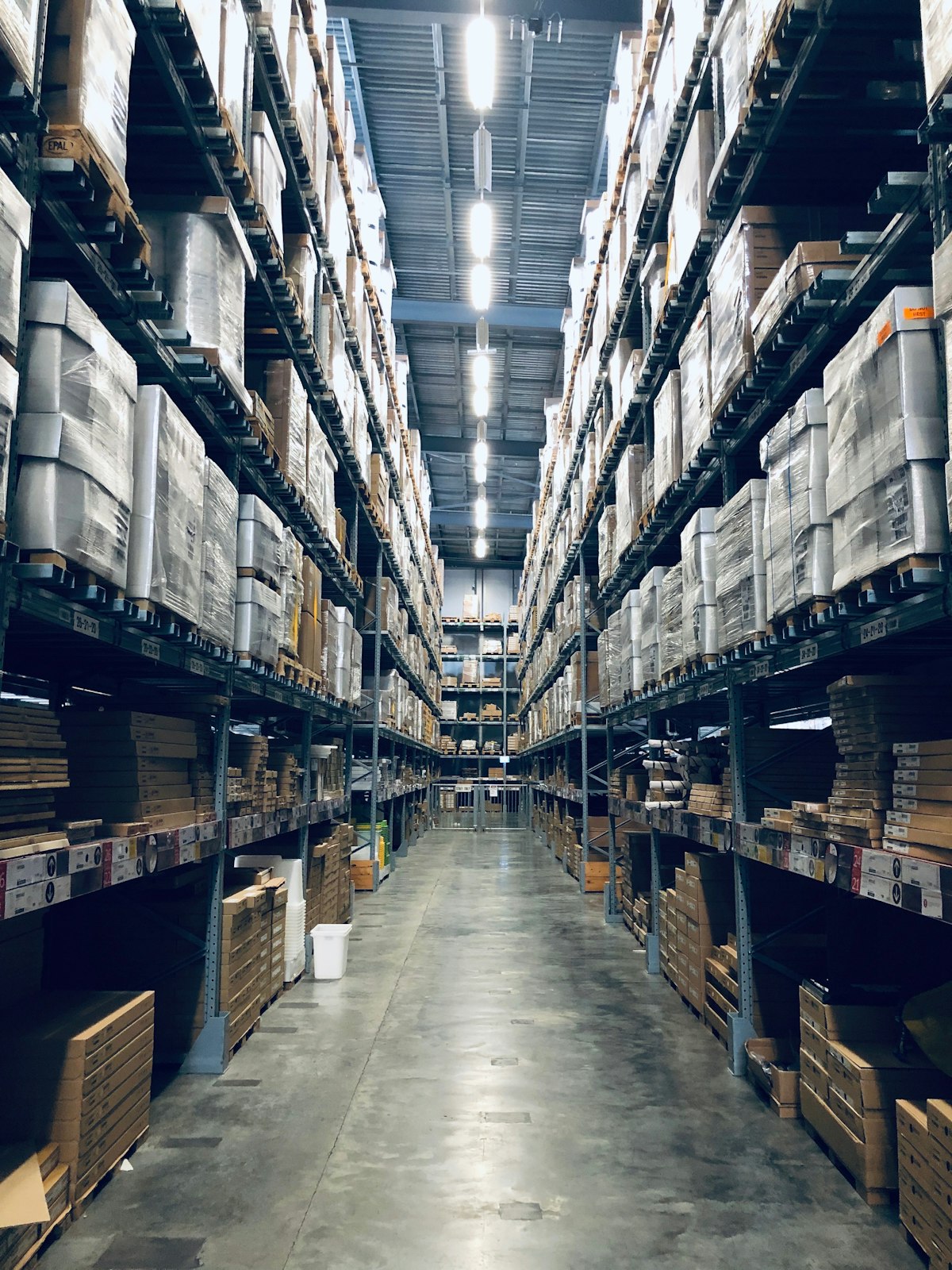
Amazon operates 48 warehouse locations in Georgia, employing over 21,000 people — and recording injury rates nearly double the industry average.
The Numbers: Amazon's Injury Crisis by the Data
Each year, the Occupational Safety and Health Administration (OSHA) collects workplace injury data from major employers. What that data shows about Amazon — every year, without exception — is a rate of serious injuries that dwarfs the competition.
⚠Amazon represents 79% of workers at large warehouses — but 86% of all injuries at those facilities. That gap between workforce share and injury share is the clearest evidence that something structural is different about how Amazon operates.
⚠Amazon's injury rate was triple that of Walmart in 2023, a direct competitor operating at similar scale. This is not an industry-wide problem — it is an Amazon-specific one.
⚠In each of the past seven consecutive years, Amazon workers have been injured at nearly twice the rate of workers at other warehouses. This is not a bad quarter or an outlier year. It is a documented, sustained pattern.
What the Senate Investigation Found
In December 2024, the U.S. Senate Committee on Health, Education, Labor and Pensions — led by Sen. Bernie Sanders — released the findings of an 18-month investigation into Amazon's workplace safety record. The investigation reviewed seven years of internal Amazon data, OSHA records, and testimony from more than 130 Amazon workers across the country.
The findings were stark:
- Amazon workers were forced to maintain a pace of work that internal studies identified as dangerous — and Amazon chose not to act on its own findings.
- An internal Amazon study called Project Elderwand, conducted in 2021, determined that workers who pick items off shelves could make up to 1,940 repetitive movements in a 10-hour shift before their risk of lower-back injury significantly increased. Amazon never implemented rules to cap workers below that threshold, because doing so would have impacted "customer experience."
- Amazon's on-site medical facilities were found to obstruct workers from accessing outside care — staff blamed workers for their own injuries, failed to consult specialists, and routinely denied referrals to external physicians.
- Amazon manipulated how it calculated and reported injury rates, comparing its warehouses to an industry benchmark composed of only the largest, highest-risk warehouses — making its numbers look better than they actually are by cherry-picking the comparison group.
Amazon rejected the investigation's conclusions, calling it "an attempt to collect information and twist it to support a false narrative." The company has pointed to year-over-year declines in its reported injury rate and announced investments in robotics and safety programs. Regulators, independent researchers, and the Senate committee's data have consistently reached a different conclusion.

Repetitive motion, speed quotas, and inadequate recovery time are the documented drivers of Amazon's elevated injury rate — not individual worker error.
What Happens to Injured Amazon Workers in Georgia
Georgia is home to one of Amazon's largest regional networks. The company operates more than 48 warehouse and logistics facilities across the state, with major concentrations in:
| Region | Notable Facilities | Estimated Workers |
|---|---|---|
| Metro Atlanta | ATL6, CGA2, DAT3, FGA2, GAT1, PGA1, RAT2, RGA2, SGA1, TJA2, UGA1 | 10,000+ |
| Savannah / Coastal Georgia | 640,000-sq-ft fulfillment center (Pine Meadow Drive), two sortation centers | 1,000+ |
| Columbia County (Augusta area) | Fulfillment center announced 2020, robotics-equipped | 800+ |
| North Georgia / Pendergrass | Large fulfillment hub serving I-85 corridor | 1,500+ |
With that footprint comes a proportional share of injuries. The most common injuries reported by Georgia Amazon workers — and by injured-worker attorneys across the state — follow the same patterns seen nationwide:
Back and Spine Injuries
The single most prevalent category of Amazon warehouse injury. Workers who spend shifts lifting, bending, and moving inventory — often under rate-monitoring software that penalizes slower performance — develop acute and chronic back injuries at disproportionate rates. A single acute lower-back injury from lifting can require surgery, months of physical therapy, and permanent restrictions that end a warehouse career.
Repetitive Motion and Musculoskeletal Disorders
Carpal tunnel syndrome, tendonitis, rotator cuff injuries, and other repetitive strain conditions are endemic in Amazon fulfillment centers. Workers in pick, pack, and stow roles make thousands of identical motions per shift. OSHA's general industry ergonomics standard — and Amazon's own Project Elderwand data — identify these conditions as predictable consequences of Amazon's productivity demands.
Forklift and Equipment Accidents
Amazon warehouses operate fleets of powered industrial trucks, robotic drive units, and conveyor systems. Contact injuries, crush injuries, and struck-by incidents involving warehouse equipment occur regularly at large fulfillment centers. These accidents often result in the most serious and catastrophic injuries, including fractures, amputations, and head trauma.
Slip, Trip, and Fall Accidents
Wet floors, cluttered aisles, uneven surfaces, and the physical fatigue of long shifts all contribute to fall injuries in Amazon facilities. Falls can produce broken bones, knee injuries, shoulder injuries, and in serious cases, traumatic brain injuries — particularly when the fall involves elevated surfaces or equipment.
Heat-Related Illness
Amazon fulfillment centers are large, difficult to cool, and often located in Georgia's climate. Heat exhaustion and heat stroke are documented risks, particularly during summer months and for workers in receiving docks or facilities with inadequate climate control. Heat stroke is a medical emergency that can cause permanent organ damage and death.
▶Georgia workers' compensation covers all of these injury types — regardless of how fast Amazon says you were moving or what its internal productivity records show. If you were injured in the course and scope of your employment, you have rights under Georgia law. Period.

Back and spine injuries are the most common — and most debilitating — category of injury at Amazon fulfillment centers. Georgia law provides specific protections for injured workers regardless of fault.
Georgia Law: Your Rights as an Injured Amazon Worker
Georgia's workers' compensation system is governed by O.C.G.A. Title 34, Chapter 9 — commonly referred to as the Georgia Workers' Compensation Act. The system is designed as a no-fault framework: you do not need to prove that Amazon was negligent to receive benefits. You need to show that you were an employee, that you were injured, and that the injury arose out of and in the course of your employment.
Key Georgia Workers' Compensation Statutes
| Statute | What It Provides |
|---|---|
| O.C.G.A. § 34-9-1 | Defines "employee" broadly — covers Amazon warehouse workers whether full-time, part-time, or temporary through a staffing agency placed by Amazon |
| O.C.G.A. § 34-9-80 | Critical deadline: You must report your injury to your employer within 30 days of the accident. Failure to report within 30 days can bar your claim entirely |
| O.C.G.A. § 34-9-82 (filing deadline) | Workers' compensation claims must be filed within one year of the date of injury or the last date of authorized medical treatment |
| O.C.G.A. § 34-9-200 to § 34-9-207 | Medical treatment rights — you are entitled to medical care, but in Georgia, the employer (through its insurer) controls the authorized treating physician. Choosing your own doctor without authorization can jeopardize your claim |
| O.C.G.A. § 34-9-261 to § 34-9-263 | Temporary total disability (TTD) benefits — if you cannot work due to your injury, you are entitled to two-thirds of your average weekly wage, subject to a statutory maximum |
| O.C.G.A. § 34-9-264 | Temporary partial disability (TPD) — if you return to modified or lighter duty at a lower wage, you can receive benefits for the wage difference |
| O.C.G.A. § 34-9-265 | Permanent partial disability (PPD) — if your injury results in permanent impairment, you are entitled to a scheduled award based on the body part affected and the degree of impairment |
The 30-Day Reporting Rule — The Most Dangerous Deadline
Under O.C.G.A. § 34-9-80, you are required to give your employer written or oral notice of your injury within 30 days of the accident. This is the most commonly missed deadline in Georgia workers' compensation — and missing it is one of the primary grounds Amazon's workers' compensation insurer will use to deny your claim.
Amazon's Authorized Physician Network — A Known Trap
Georgia is an employer-directed medical system. That means Amazon and its insurer have the right to direct you to an authorized treating physician from a panel of doctors they select. Going outside that network for treatment — even to your own primary care doctor — can result in your medical bills being denied and your claim being contested.
This creates a dynamic that many injured workers do not anticipate: the doctor managing your care was selected by the company whose costs are reduced when you recover faster and return to work sooner. Understanding that dynamic — and knowing when and how to request an independent medical examination or change of physician — is one of the most important things an experienced workers' compensation attorney can do for you.
Hurt at an Amazon Warehouse in Georgia?
Don't let Amazon's workers' compensation insurer manage your recovery on their terms. At Morrison & Hughes, we fight for injured Georgia workers — with no fees unless we win your case.
What to Do If You Are Injured at an Amazon Facility
The steps you take in the hours and days after a workplace injury at Amazon can make the difference between a claim that is paid and one that is denied. Amazon's workers' compensation insurer is sophisticated and well-resourced. Your response to the injury — from the moment it happens — will be documented and used in evaluating your claim.
- Report the injury immediately and in writing. Tell your supervisor the same shift it happens. Do not leave for the day without reporting. Ask for confirmation of your report, and note the time, date, and the name of the person you reported to. Georgia's 30-day deadline leaves no room for hesitation.
- Seek medical care through Amazon's authorized channel — but know your rights. Amazon will direct you to an on-site AmCare facility or an approved clinic. Go. But you have the right under Georgia law to a second opinion through an independent medical examination if you dispute the authorized physician's findings. An attorney can help you exercise that right properly.
- Do not give recorded statements to Amazon's insurer without an attorney. The workers' compensation insurer will ask for a recorded account of the accident. You are not required to give one without first consulting an attorney. The way you describe your injury in that statement can be used to reduce or deny your benefits.
- Document everything. Photograph any visible injuries. Keep every piece of paper — incident reports, clinic visit summaries, pharmacy receipts, pay stubs showing missed time. A contemporaneous record is one of the strongest tools in a disputed workers' compensation case.
- Contact a workers' compensation attorney early. In Georgia, workers' compensation attorneys work on contingency — you pay nothing unless your attorney secures benefits or a settlement for you. There is no downside to making that call while the evidence is fresh and before Amazon's insurer has had time to build a case against your claim.
Further Reading: Real Sources on Amazon's Safety Record
The following articles and investigations are real, verifiable, and among the most thorough reporting available on Amazon's workplace injury problem:
Bottom Line
Amazon warehouse work is genuinely dangerous — not because of bad luck, and not because of workers making mistakes. It is dangerous because the company built a system that prioritizes speed over safety, was warned by its own internal research, and chose not to act. Seven years of data, a Senate investigation, and repeated OSHA enforcement all reach the same conclusion.
If you work at an Amazon facility in Georgia and you have been injured, Georgia law provides you with meaningful rights: workers' compensation benefits, medical care, and income replacement while you recover. But those rights are time-sensitive — the 30-day reporting deadline and one-year filing deadline are real cutoffs that Amazon's insurer will use against you if you miss them.
At Morrison & Hughes, we know how Amazon's workers' compensation process works, and we know how to fight back when injured workers are being shortchanged. If you or someone you know was hurt at an Amazon warehouse anywhere in Georgia, contact us for a free, confidential consultation. There is no fee unless we win.
Legal references: O.C.G.A. § 34-9-1 et seq. (Georgia Workers' Compensation Act); O.C.G.A. § 34-9-80 (30-day injury reporting requirement); O.C.G.A. § 34-9-261 through § 34-9-265 (disability benefit provisions); 29 C.F.R. § 1910.176 (material handling); 29 C.F.R. § 1910.178 (powered industrial trucks); OSH Act § 5(a)(1) (General Duty Clause, 29 U.S.C. § 654). Statistics sourced from OSHA injury reporting data, NELP 2024 analysis, and the U.S. Senate HELP Committee investigation report (December 2024).