
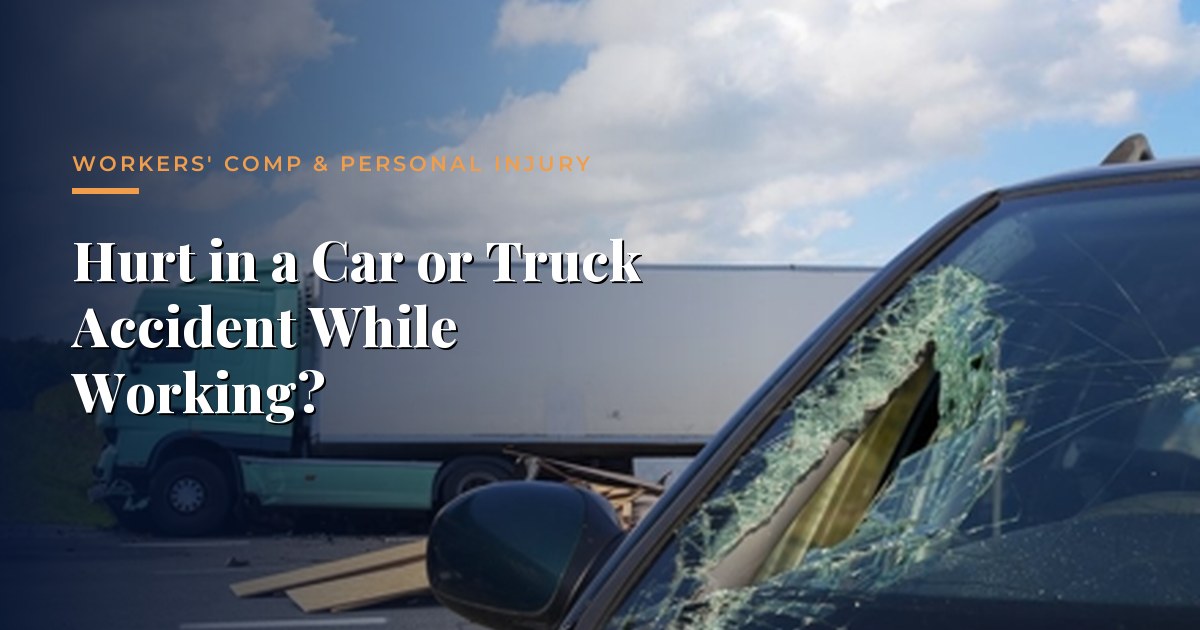
Depending on the nature of your accident, you may have more than one legal action — and that's good news, because there are times when you can effectively "double dip" on your recovery. One claim is against the at-fault party in your car or truck accident (the negligent driver); the other is against your employer's insurer for workers' compensation. With skilled attorneys, you can navigate both toward a successful settlement.
Who Is "At Fault," and When Does It Matter?
The at-fault party is whoever caused your accident, along with their auto insurer. Usually the negligent driver gets a traffic citation, but not always — and a ticket isn't required to win your personal injury case. Sometimes the officer identifies fault but only issues a warning, or doesn't write a ticket because the crash happened on private property. In that case the at-fault driver is typically listed as "Driver 1" on the accident report — often the person who rear-ended you, ran a red light, or missed a stop sign. Get a copy of your police report; we can help with that.
What if I'm the At-Fault Driver?
Even if you caused the collision, you're still entitled to workers' comp benefits under Georgia law — as long as you were on the job when it happened, you were injured, and the insurer has no other defenses. Fault alone is not a defense. Your employer's insurance is still responsible for your care and income replacement when appropriate.
Many people are misled to believe a work injury has to be the employer's fault. That's untrue. If you're wondering whether you can get medical treatment and workers' comp checks after an on-the-job car, truck, boat, forklift, heavy-machinery, or motorcycle accident, call us — our attorneys can help you understand your rights.
Is It Ever Possible to "Double Dip"?
Your accident has two different responsible parties, and an experienced attorney knows where and how to file each claim to maximize your recovery:
- Workers' CompensationYour employer's workers' comp insurer is responsible for benefits because the accident happened while you were working — even if you traveled out of state or don't normally work from your car.
- Third-Party Personal InjuryThe driver who struck you is responsible for a personal injury claim, because their negligence caused the crash.
That means you may be able to recover from both the at-fault driver's car insurance and your employer's workers' comp insurance. It's one of the rare times the law permits some degree of double recovery — and because insurers fight most claims and always try to pay less than a claim is worth, this "double dip" is often the only way to truly make you whole.