
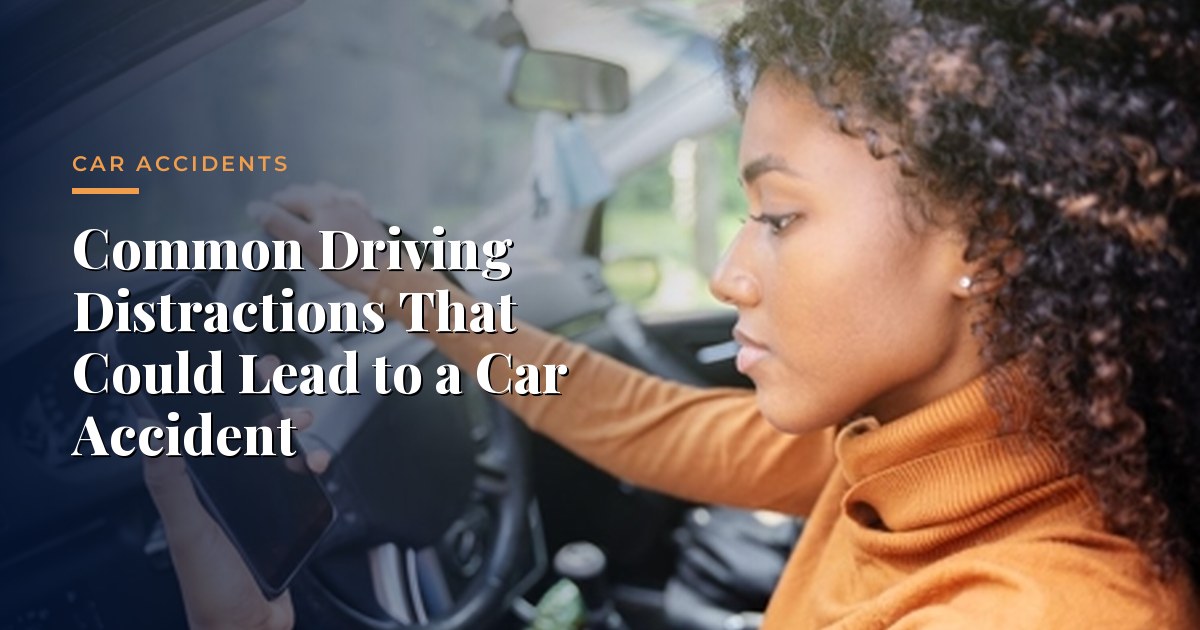
The AAA Foundation for Traffic Safety conducted a study of the most common distractions likely to occur behind the wheel — the kind that pull a driver's attention away and can lead to a car accident. Participants performed a number of tasks in three settings: while not driving, while driving in a simulator, and while actually driving.
The results, ranked from least distracting to most distracting, are as follows:
-
Listening to the radioMinimal risk
A driver typically selects a station, adjusts the volume, and begins driving. Even humming or singing along was minimally distracting and not a significant risk.
-
Listening to an audiobookMinimal risk
Similar to the radio, driving while listening to a book on tape was minimally distracting and not a significant risk.
-
Talking with passengersModerate risk
You see it every day. Interestingly, drivers in the study weren't allowed to turn their heads or use hand gestures — and even with those restrictions, talking while driving presented a moderate risk of distraction.
-
Handheld cellphoneModerate risk
Despite talking on a cellphone being one of the leading causes of crashes and fatalities, it remains one of the most common things we do behind the wheel. More than 10 states and the District of Columbia have banned handheld cellphone use while driving. It constitutes a moderate risk.
-
Hands-free cellphoneModerate risk
Does not physically holding the phone make a difference? Surprisingly, no. A study by the Highway Loss Data Institute showed virtually no difference in distraction between handheld and hands-free use. Any cellphone use presents a moderate risk.
-
Speech-to-text devicesGreatest risk
One step above hands-free calling, using speech-to-text to send an email or text, post to social media, and the like is inherently dangerous — the greatest risk of all. You take your attention off driving to focus on what you're saying, then glance at the screen to verify it transcribed correctly: a perfect recipe for a crash.