
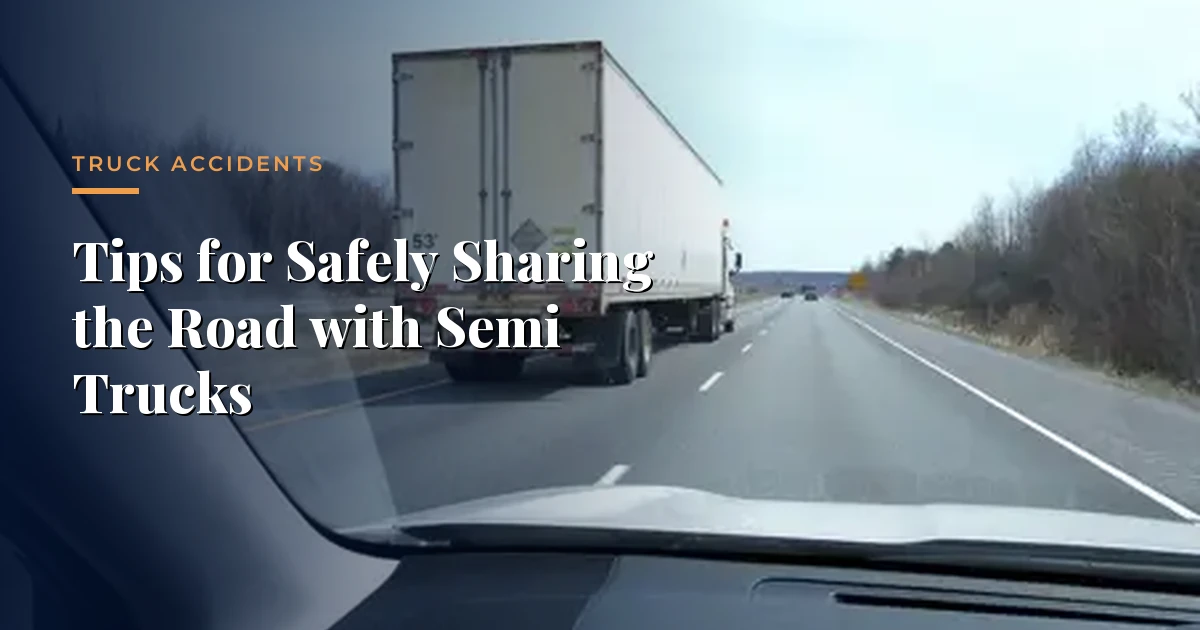
Sharing the highway with semi trucks calls for extra awareness. Their size, blind spots, and long stopping distances mean the safest driving habits around a passenger car are not always enough around an 80,000-pound truck. Here is how to stay visible and give yourself room around large commercial vehicles.
Recognizing Blind Spots: The "No-Zone"
When driving alongside semi trucks, it's crucial to be aware of their significant blind spots, commonly referred to as the "No-Zone." These are areas around the truck where the driver has limited or no visibility — including directly behind, in front, and on both sides of the vehicle. It's in these zones that a car can virtually "disappear" from view, increasing the risk of a collision.
To maintain safety on the road, it's essential for drivers to avoid lingering in these blind spots. Instead, they should strive to either stay well ahead of or behind a semi truck, ensuring they remain visible to the truck driver at all times.
Braking Distance and Stopping Time
The sheer size and weight of a semi truck mean that it requires a much longer distance to come to a complete stop compared to a passenger vehicle. Factors such as road conditions, truck load, and speed can significantly affect a truck's braking distance. For instance, a fully loaded semi truck traveling at highway speeds may need the length of two football fields to stop safely.
Guidelines for Safely Passing Semi Trucks
Passing a semi truck requires careful consideration and timing. Before attempting to pass:
- Ensure that you have a clear view of the road ahead and that there's enough space to complete the maneuver safely.
- Accelerate steadily and pass on the left side, where the truck's blind spot is smaller.
- Once you've overtaken the truck, don't cut in too quickly — wait until you can see the entire front of the truck in your rearview mirror before re-entering the lane.
This ensures that you're at a safe distance from the truck, reducing the risk of a collision should the truck need to brake suddenly.
The Importance of Signaling Intentions
Just as it's important to understand truck signals, it's equally crucial for you to clearly signal your intentions on the road. Always use your turn signals well in advance of making a lane change or turn, especially when in the vicinity of a semi truck.
This gives the truck driver time to adjust their driving accordingly. Additionally, avoid sudden moves or brakes that could catch a truck driver off guard. Clear and early signaling can prevent many of the misunderstandings that lead to accidents, making the roads safer for both you and the truck drivers.