
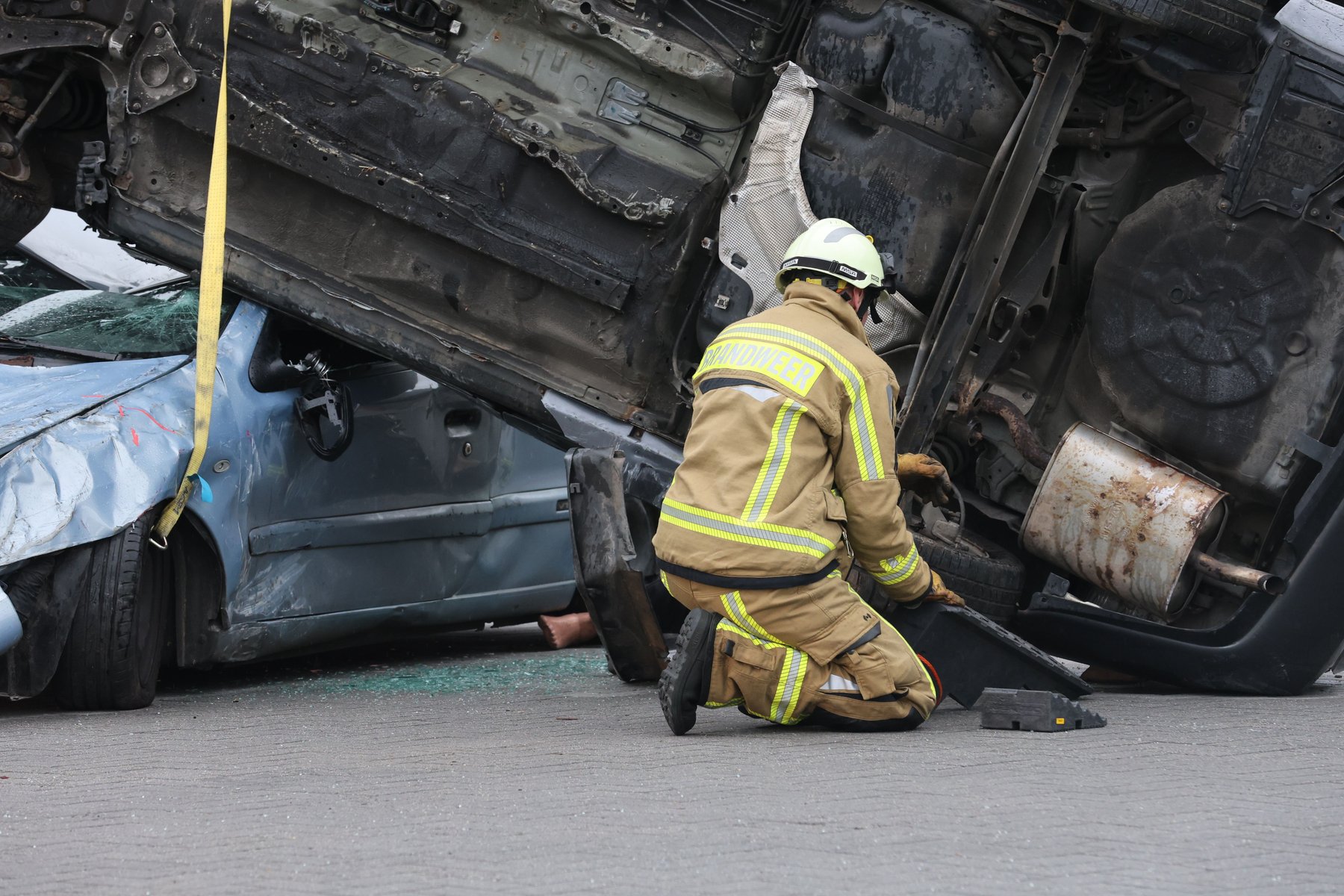
Every serious crash is really two events. There is the collision itself, and then there is the fight over what actually happened. On one side is an insurance company with adjusters, engineers, and accident reconstruction experts whose job is to minimize what they pay. On the other side is you, trying to recover from an injury while the evidence that proves your version of events quietly disappears.
At Morrison & Hughes, we treat that evidence as the case. We move quickly and work with qualified accident reconstruction experts using drones, 3D scanning, and vehicle data recorders to capture what happened before it is gone. This is the technology edge we bring to our clients, and here is how it works and why it can change the outcome of a claim.
The First Hours Decide What Evidence Survives
A crash scene is temporary. Within hours, traffic resumes, skid marks fade, debris is swept away, and weather erases what is left. The vehicles are towed, then repaired, resold, or scrapped. The data stored inside them can be overwritten or lost the moment the car is started again or the battery is disconnected. A police report captures a brief snapshot, but it is written to document a traffic event, not to prove the value of a civil injury claim.
That short window is exactly why the right technology, used quickly, matters so much. The goal is to preserve a complete, measurable record of the scene and the vehicles while it still exists.
Drones: The View You Cannot Get From the Ground
A licensed drone operator, certified under FAA Part 107 rules for commercial flight, can photograph a crash scene from directly overhead and from every angle in a matter of minutes. Those images are far more than nice pictures. Using a technique called photogrammetry, hundreds of overlapping aerial photos are stitched into a single scaled, measurable map of the scene, and even a 3D model of the roadway.
From that aerial record, a reconstruction expert can measure things that are almost impossible to capture accurately from ground level:
- The true length and path of skid marks, yaw marks, and gouges in the pavement
- The grade, curvature, and lane geometry of the road
- Sightlines and obstructions that show what each driver could and could not see
- The exact distances between the point of impact, debris fields, and where each vehicle came to rest
- Large multi-vehicle and tractor-trailer scenes that are simply too big to document from the shoulder
The payoff is twofold. The measurements feed a precise reconstruction, and the imagery gives an adjuster, mediator, or jury a clear, undeniable view of the scene that words alone cannot convey.
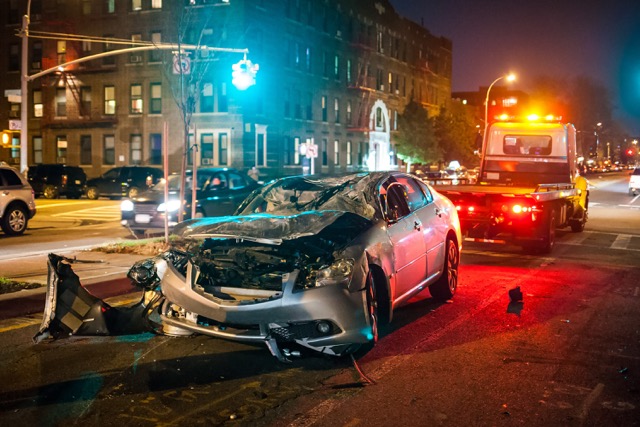
A scene like this changes within hours. Aerial mapping preserves it as a scaled, measurable record before the road reopens.
Reading the Vehicles: Crush Damage and 3D Scanning
The vehicles are evidence too, and they tell a detailed story. The pattern, depth, and direction of the crush damage record the forces involved in the collision. A door caved in at a specific angle, a bumper crushed to a measurable depth, and paint transfer between two cars all carry information about speed, direction, and the point of contact.
3D laser scanning and photogrammetry capture the exact geometry of that damage down to the millimeter. From it, an engineer can estimate the impact speed and the change in velocity, known as delta-V, that each occupant experienced. That number matters because it connects directly to the severity of an injury. Matching the damage between two vehicles also establishes the true angle of impact and who struck whom, which is often the exact point an insurer tries to blur when it shifts blame onto the injured driver.
The Car's Black Box: Event Data Recorders
Most vehicles built in the last two decades contain an Event Data Recorder, or EDR, the automotive equivalent of an aircraft black box. Federal regulations at 49 CFR Part 563 standardize what these devices record when they are present, and today the large majority of new vehicles include one.
In the few seconds surrounding a crash, an EDR can capture a remarkable amount of objective data:
- Pre-impact vehicle speed in the seconds before the collision
- Throttle and brake application, showing whether a driver hit the gas or the brake, and when
- Steering input and, in many vehicles, the change in velocity at impact
- Seatbelt status and airbag deployment timing
This information is retrieved by a qualified analyst using a specialized Crash Data Retrieval system. Because it comes straight from the vehicle rather than from a witness's memory, it is objective and very hard to dispute. When a driver claims they were going the speed limit, the EDR often tells the real story.

Commercial trucks add another layer of data. Engine control modules and telematics systems can record speed, braking, and hours of service that are central to a trucking case.
Putting It Together: Accident Reconstruction
None of these tools works in isolation. A qualified accident reconstructionist combines the aerial scene map, the 3D vehicle scans, the EDR download, and the physics of the collision, including the conservation of momentum and energy, using validated simulation software. The result is a defensible, expert-supported account of exactly what happened: the speeds involved, the sequence of events, and who is at fault.
That account is then presented in a form people can actually understand, through clear reports, scaled diagrams, and animations that walk a mediator or jury through the crash step by step. It turns a chaotic event into a clear story backed by data.
How This Technology Helps Your Case
Technology is not about gadgets for their own sake. Every one of these tools exists to do one thing: prove what happened so our clients are treated fairly. Here is where it makes the difference.
What This Means for You, in Plain Terms
- It helps prove the crash was not your fault, even when the other driver says it was
- It answers the insurance company's own experts when they try to pin the blame on you
- It shows how fast the cars were going and how hard they hit, which backs up how serious your injuries really are
- It turns a confusing wreck into clear pictures and diagrams that an insurance adjuster or a jury can easily follow
- It can make the difference in the hardest cases, like a serious injury, a truck wreck, or the loss of a loved one
In a disputed-fault case, this evidence can be the entire difference between a denied claim and a full recovery. When the numbers and the imagery are on your side, the insurance company's incentive to lowball you drops sharply.
The bottom line on evidence: Insurance companies invest heavily in experts because they know reconstruction works. Bringing that same level of proof to your side is how you level the field, and it is exactly what we do for the people we represent.
Why Acting Early Is Everything
The value of this technology depends entirely on timing. When we are contacted early, our team can send preservation letters that legally require the other side to protect the vehicles and data, secure the vehicles before they are repaired or scrapped, arrange EDR downloads while the information still exists, and get experts to the scene while the evidence is fresh. Wait too long, and the most powerful proof in the case may already be gone.
That is why it can be important to talk to a lawyer sooner rather than later after a serious crash. It is not about rushing to file a lawsuit. It is about making sure the evidence is preserved before it is lost, altered, or forgotten. That evidence can play a critical role in determining what your case is worth.
Injured in a Serious Crash? Let Us Protect the Evidence.
At Morrison & Hughes, we move fast to document the scene and preserve the data before it disappears. Free and confidential consultations are available now, and there is no fee unless we win.
Frequently Asked Questions
Does my car really have a black box?
Who pays for drones, scanning, and reconstruction experts?
Is drone and vehicle data evidence allowed in court?
What if a police report already blamed me for the crash?
Bottom Line
The truth of a crash does not have to come down to your word against theirs. Drones, 3D scanning, event data recorders, and accident reconstruction turn a disputed collision into a documented, measurable set of facts. That evidence is perishable, though, and the insurance company is counting on it slipping away. The sooner it is preserved, the stronger your case becomes.
If you or a loved one was seriously injured in a crash in Georgia, Morrison & Hughes is ready to bring this technology to bear on your behalf. The consultation is free, and you pay nothing unless we win your case.
Educational references: FAA Part 107 (Small Unmanned Aircraft Systems); 49 CFR Part 563 (Event Data Recorders). This article is general information about accident reconstruction technology and is not legal advice.Quick Reference: The Technology We Bring to a Case
- Drone aerial mapping and photogrammetry (FAA Part 107 pilots)
- 3D laser scanning of scenes and vehicles
- Crush-damage and delta-V analysis to estimate speed and force
- Event Data Recorder downloads (49 CFR Part 563)
- Commercial truck engine control module and telematics data
- Momentum and energy based reconstruction with simulation software
- Early evidence-preservation letters to protect vehicles and data