
The clock is always ticking for semi-truck drivers, whose adherence to Hours of Service (HOS) regulations is critical for road safety. These regulations, set forth by the Federal Motor Carrier Safety Administration (FMCSA), establish the maximum number of driving hours to prevent fatigue-related accidents. Despite the clarity of these rules, exceeding driving limits remains a prevalent issue. Under pressure to meet delivery deadlines, drivers often find themselves pushing beyond the legal 11-hour driving limit within a 14-hour window — risking not only their own safety but that of everyone else on the road.
Vehicle Maintenance Negligence
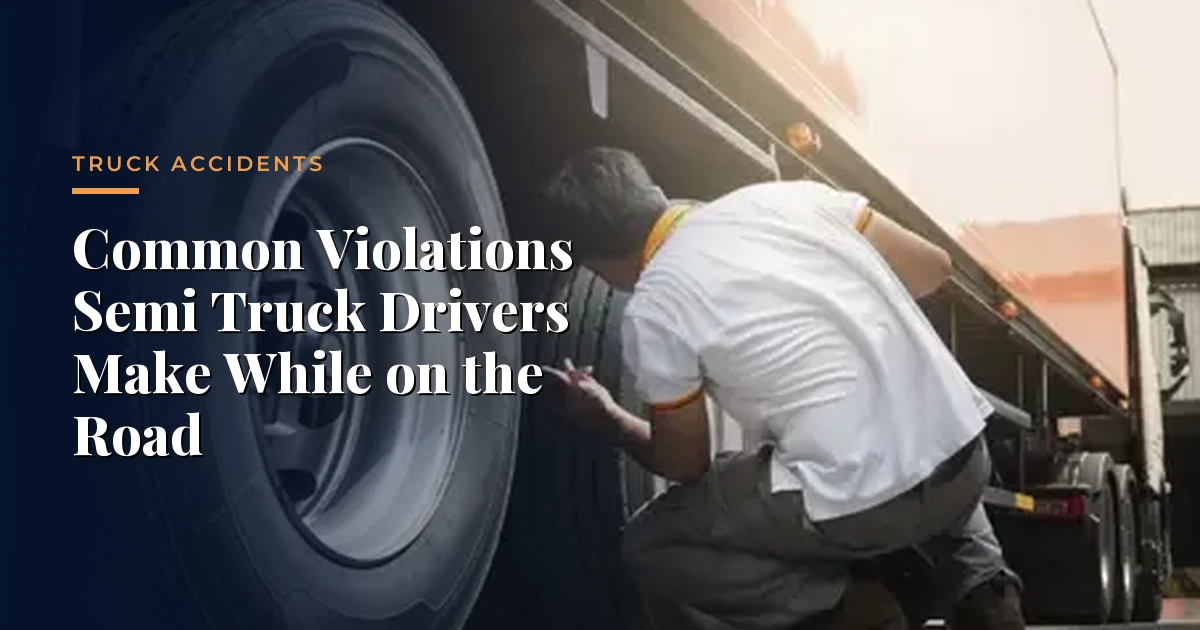
Preventative maintenance is the linchpin of road safety for semi-trucks, yet it is often overlooked. Required inspections before and after trips serve as a safeguard against mechanical failures that could lead to catastrophic accidents. These inspections are designed to identify issues with brakes, tires, lights, and other critical components. Skipping these checks not only violates regulations but also jeopardizes the integrity of the vehicle. When drivers or companies cut corners on maintenance, they risk fines and penalties — and endanger lives.
Operating a semi-truck with defective equipment is akin to gambling with high stakes. Common equipment failures, such as worn-out brake pads or damaged tires, can have disastrous consequences at highway speeds.
Traffic Law Non-Compliance
Speeding and reckless driving are not just problems for passenger vehicles; semi-truck drivers are also guilty of these dangerous behaviors. The sheer size and weight of semi-trucks mean that any collision has the potential to be deadly, making speeding an especially grave concern. Aggressive driving behaviors — such as tailgating and sudden lane changes — further compound the risks. The impact of such actions is far-reaching, leading to severe accidents, traffic congestion, and a negative public perception of the trucking industry.
Substance Abuse and Fitness to Drive
The trucking industry has zero tolerance for alcohol and drug violations, yet substance abuse remains a pressing issue. The FMCSA's strict regulations aim to ensure that drivers are sober and alert while operating their vehicles. Despite rigorous testing protocols, there are still instances of drivers being under the influence, which can impair judgment and reaction times and lead to serious accidents. The industry continues to battle this problem, emphasizing the importance of sobriety for the safety of the driver and everyone else on the road.