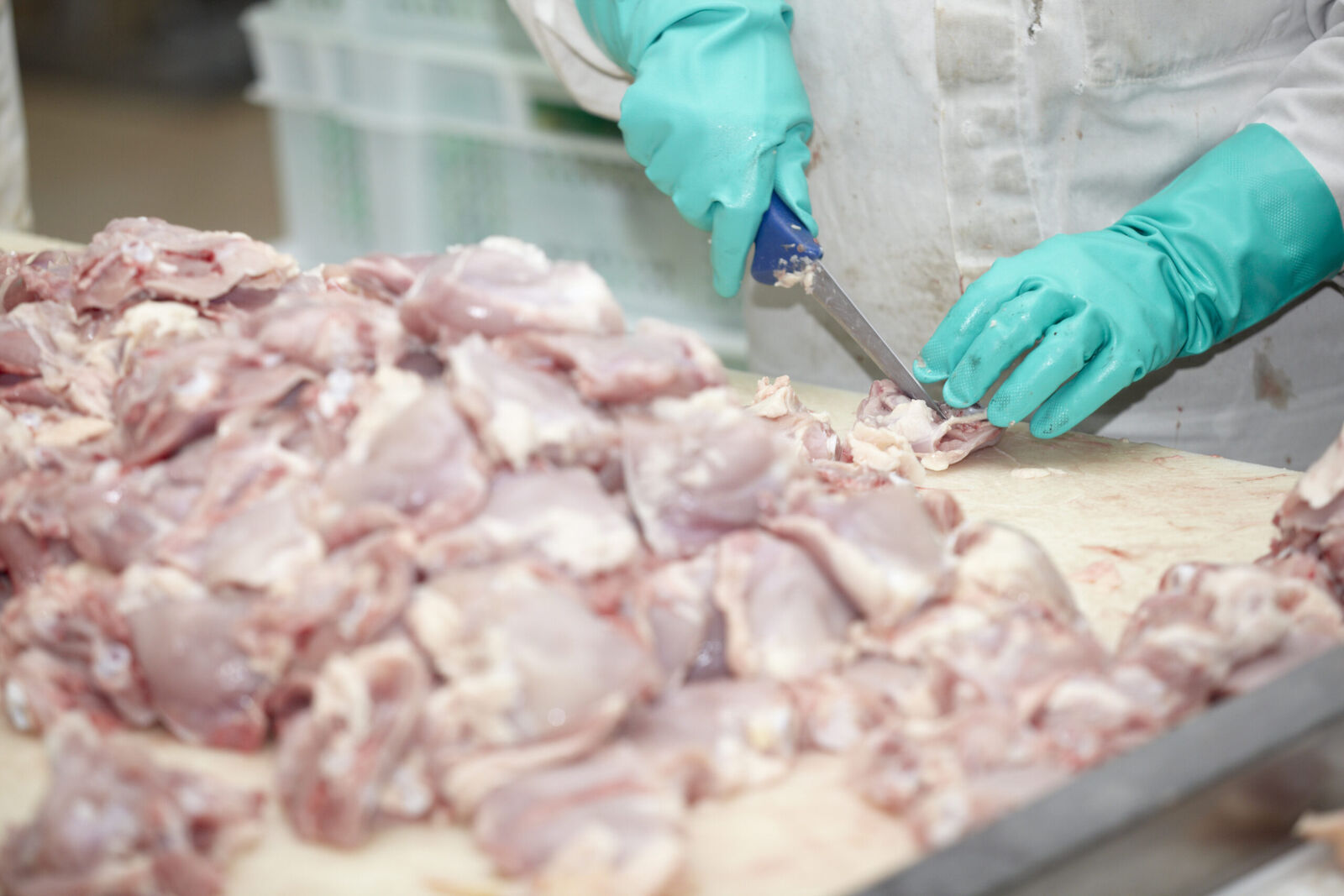
OSHA identifies poultry processing as one of the most hazardous jobs in the country. From the first cut to final pack-out, workers face the same dangers shift after shift — and high line speeds make every one of them worse.
Repetitive-Motion Injuries & MSDs
Deboning and cutting require the same forceful motion tens of thousands of times a day. The result is tendonitis, rotator-cuff tears, trigger finger, and chronic back, shoulder, and elbow musculoskeletal disorders (MSDs) — the most common poultry injury of all.
Carpal Tunnel Syndrome
Repetitive gripping and wrist motion at high line speed compress the median nerve. Studies have found poultry workers face dramatically elevated risk of carpal tunnel and similar nerve disorders — often requiring surgery and permanent work restrictions.
Lacerations from Knives & Blades
Sharp knives, scissors, and powered cutting equipment cause deep cuts to hands, fingers, and forearms. Fast lines, fatigue, and crowded stations turn a slipped blade into a tendon injury, nerve damage, or partial amputation.
Slips & Falls on Wet Floors
Processing uses enormous volumes of water; combined with fat and skin scraps on walkways and stairs, floors become dangerously slick. OSHA flags slips, trips, and falls as a leading cause of serious poultry-plant injuries.
Ammonia & Chemical Exposure
Plants use anhydrous ammonia as a refrigerant. A leak can cause chemical burns, severe respiratory injury, and — at process-safety quantities — catastrophic, even fatal, releases. Cold-side workers are at constant risk.
Peracetic Acid (PAA) Exposure
Peracetic acid, sprayed as an antimicrobial, is a powerful oxidizer. Exposure causes burning eyes, coughing, and irritation of the nose, throat, and lungs. NIOSH and NELP have flagged PAA as an under-regulated respiratory hazard for line workers.
Machinery & Caught-In Injuries
Conveyors, augers, chillers, and powered cutters can crush, amputate, or pull in a worker when guards are missing or lockout/tagout is ignored. These are among the most catastrophic poultry-plant injuries.
Cold, Noise & Fatigue
Hours in refrigerated rooms, deafening equipment noise, and relentless quotas compound every other hazard — worsening MSDs, masking pain, and contributing to long-term hearing loss.
Falls from Pressure to Keep Up
Line-speed and piece-rate pressure discourages workers from stopping to clean spills, fix guards, or report pain. USDA's PULSE study tied injury risk closely to the volume workers process — the faster the line, the higher the toll.