
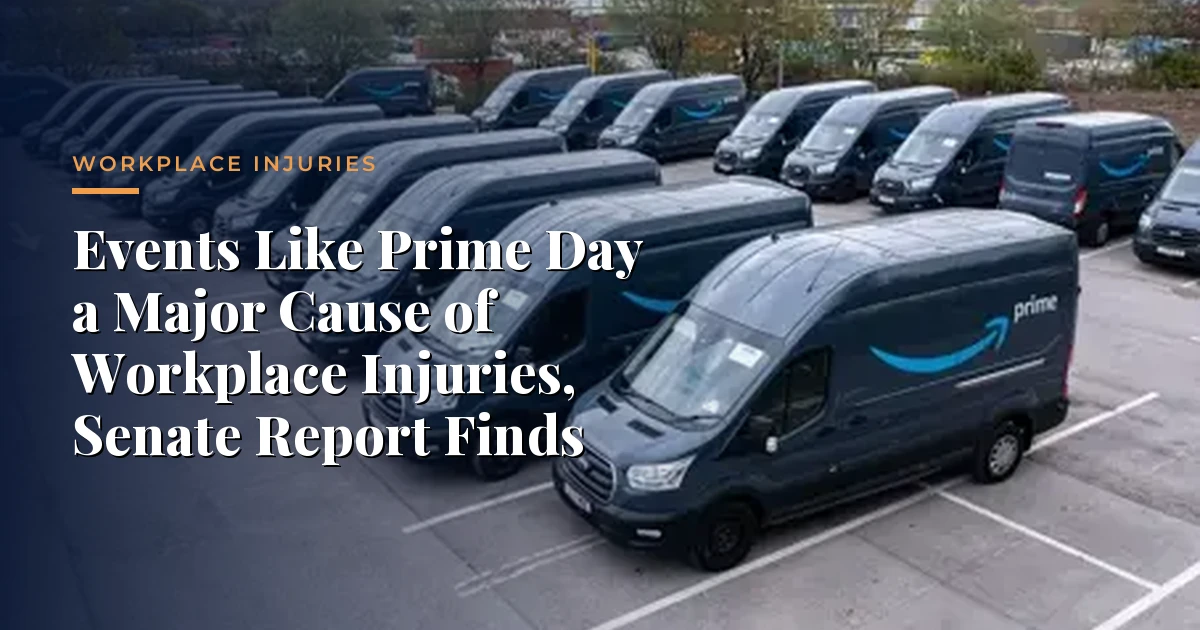
There's no question that busy times can be good for business, but not necessarily good for workers — especially when it comes to increased volume, pressure, stress, and risks for injuries.
But just how dangerous are peak seasons, holidays, and major sales events for workers in consumer-oriented companies? According to a recent report from the U.S. Senate's Health, Education, Labor & Pensions Committee, very dangerous.
The report — titled "Peak Seasons, Peak Injuries" — explores the dangers of major sales events through the scope of Amazon's Prime Day, an annual event marked by deep discounts for subscribers and massive profits for the company. Over the course of its two-day Prime Day event in 2023, for example, Amazon recorded $12.7 billion in sales for 375 million products.
But as profitable as Prime Day and other high-demand periods may be, the report notes, they're also a major cause of injuries for the warehouse workers who make them possible. That's due to, among other factors, an incredibly intense pressure to meet soaring quotas and an expedited pace required to fulfill an enormous volume of orders.
In its effort to illustrate how Amazon's business model prioritizes speed and profit over the safety and well-being of its workers, the report highlights several key findings:
- High injury rates. Data collected from various Amazon warehouses show a spike in injury rates during Prime Day events. During Prime Day 2019, Amazon's rate of recordable injuries reported to OSHA was over 10 injuries per 100 workers — more than double the industry average — while its total injury rate (including injuries the company isn't required to disclose to OSHA) was just under 45 per 100 workers, nearly half of its warehouse employees. The report credits these figures to an accelerated work pace and heightened expectations that leave workers more prone to musculoskeletal disorders, repetitive strain injuries, and acute accidents.
- Lack of adequate safety measures. The report criticizes Amazon for failing to implement sufficient safety measures to protect workers, particularly during high-stress periods. Despite warnings and previous incidents, the company has not made significant improvements to reduce the risk of injuries.
- Pressure and fear of retaliation. Workers report that they often feel pressured to meet impossible quotas during high-demand periods like Prime Day, and that they fear retaliation if they fall short — creating a work culture where employees push themselves beyond safe physical limits.
- Inadequate response to injuries. Some workers claim their injuries were downplayed or ignored, with internal practices allegedly prioritizing productivity over ensuring injured workers receive proper care and recovery time.
The Rights of Workers Injured on the Job
The Senate report highlights the perilous conditions that warehouse workers endure, especially during peak sales events. These workers, tasked with meeting exceptionally high quotas under immense pressure, are at a significantly increased risk of injury.
While Amazon and other employers have been slow to adopt necessary safety measures, warehouse workers and others who perform jobs under high-stress conditions should know that they have rights and options when they suffer work-related injuries. Recovery may be available through:
Workers' Compensation Claims
Workers' compensation provides financial support to employees who suffer job-related injuries or illnesses — typically covering medical expenses, a portion of lost wages, and rehabilitation costs, regardless of who was at fault. Even if an injury was due to the inherent risks of the job, workers are still entitled to benefits.
Civil Injury Lawsuits
In certain cases, workers may pursue a civil injury lawsuit if a third party was responsible or the employer's gross negligence played a role. Unlike workers' comp, a civil case can potentially recover more extensive damages — including pain and suffering, full lost wages, and other non-economic losses — usually pursued when an injury is severe.
Our award-winning attorneys at Morrison & Hughes have helped injured victims and workers across the Atlanta metro area recover over $300 million in compensation. As a firm that practices both personal injury and workers' compensation law, we can help those harmed in workplace accidents explore their options — whether through a workers' compensation claim or a civil personal injury lawsuit against a negligent third party.
Prior results do not guarantee a similar outcome. Every case is different, and the value of any claim depends on its specific facts.